Our Work is More than The Work

I love coaching. I love the flexibility of self-directed remote work just as much—the ability to control my own schedule and adjust my priorities as needed. In the midst of bleak national politics around our federal workforce and corporate RTO mandates, that kind of autonomy feels like a luxury. I don’t take it for granted, even as I feel deep frustration over the whiplash our modern workforce has endured over the last four years.

The work we do and the conditions in which we do it are inextricably linked.

Especially now, in this era of fragmented families and the countless, exhausted “tiny villages” of modern life. After COVID, that connection became even clearer. Our homes and workspaces blurred into one, and workers have become more vocal about the conditions of their tech-enabled labor—and that’s a good thing. We’ve fought too hard for too long to settle for less.

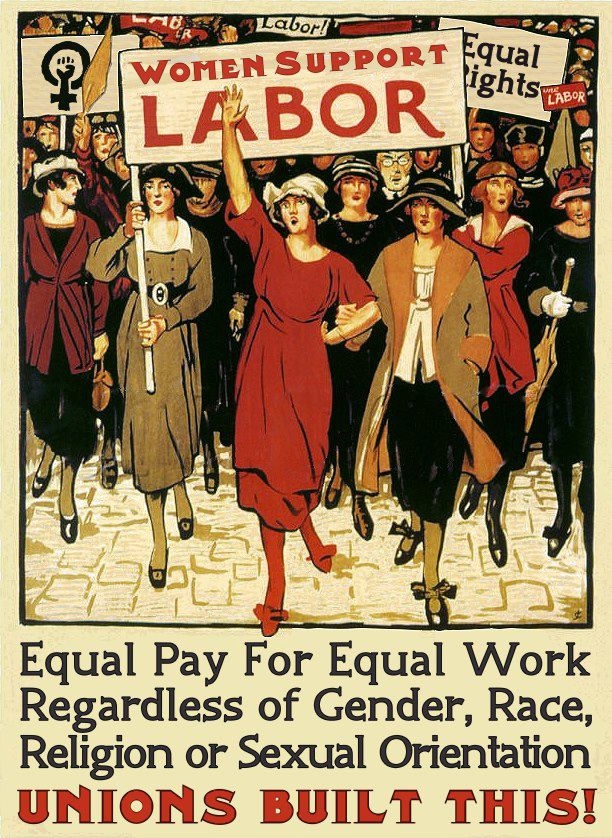
Labor organizing in the United States emerged out of necessity.

During the Industrial Revolution, workers endured grueling hours, dangerous working conditions, and wages that barely supported their families. In response, they began forming unions to fight for better pay and safer workplaces. The Homestead Strike (1892) and the Pullman Strike (1894) revealed just how brutal the conflict between labor and industry could be—often met with violence.

But those hard-fought battles led to real change.

The National Labor Relations Act of 1935 secured the right to unionize and collectively bargain, reshaping the balance of power between employers and workers. Still, the fight continues. Wage stagnation, rising inequality, and the precarious nature of work—even in the federal government, once considered a stable career path—underscore the fact that these victories aren’t permanent. As labor organizer Jane McAlevey argues in A Collective Bargain (2020), the fight for workers’ rights is ongoing—and essential for preserving democracy.

Nothing—especially not power or economic resources—is ever ceded without a fight.

Why would the conditions of our labor be any different?

That’s why I’ve been telling people lately that I’m my favorite boss I’ve ever had.

Not because I’m the best boss out there, but because I have a direct self-interest in at least not being the worst. I don’t want to exploit myself, after all.

I’m intentional about the kind of work environment I create for myself

because I’ve lived the alternative. I’ve worked long hours, felt unappreciated, and struggled under chaotic, unsupportive leadership. Now, I create and guarantee for myself:

  • A humane schedule.
  • A clear focus on my primary goals.
  • An impact that reflects my values.

It’s not lost or ceded after a fight. It’s mine to create and mine to protect.

And that’s the point. Our experience of labor isn’t just about what we produce—it’s about how we are treated while producing it. It’s about dignity, fairness, and humanity. At The Square Peg Club, my labor, my time, and my energy are mine to protect, nurture, and define. They represent not just who I am as a professional, but who I am as a person. I get to say what I need to say, when I need to say it. That’s more empowering than any work environment I’ve been in before.

And I’m not alone. In recent years, talent from traditionally marginalized backgrounds has increasingly turned to entrepreneurship to escape the barriers of traditional employment—limited advancement opportunities, toxic leadership, and inflexible schedules. While entrepreneurship still presents challenges, including access to capital, it’s a powerful testament to the rightful demand for greater agency and compassion.

That’s the kind of boundless kindness that’s missing in so many modern workplaces.

That’s what I hear all the time from my coaching clients. I’ve lived it too. And now, I have the chance to build something better—for myself and others.

The fight for agency-driven work isn’t over.

I hope that in all the discussion about technological advances, we don’t forget that our work is more than just the work: it’s about the conditions under which that labor happens. The right to work with dignity, to be treated with fairness, and to have control over our time and our impact—that’s what labor organizing has always been about. And that’s still worth fighting for.

Start typing and press Enter to search

Shopping Cart